How and Why Google is Deleting Reviews

Patterns in Google Review Deletions
This article is a research done on the GMBapi.com customer base. It is based on 5 million reviews across 79 countries and over 20,000 locations. While the first instance of a deleted review (in our system) occurred in September 2024, the dataset includes reviews dating back to January 2012, which is when the earliest deleted review was created.
Online reviews are crucial in shaping a business’s reputation and financial performance. But what happens when these reviews disappear? A striking number of reviews are removed by Google, leaving businesses and customers questioning the underlying reasons. To uncover the patterns behind these deletions, we analysed a large dataset from thousands of business locations across various industries.
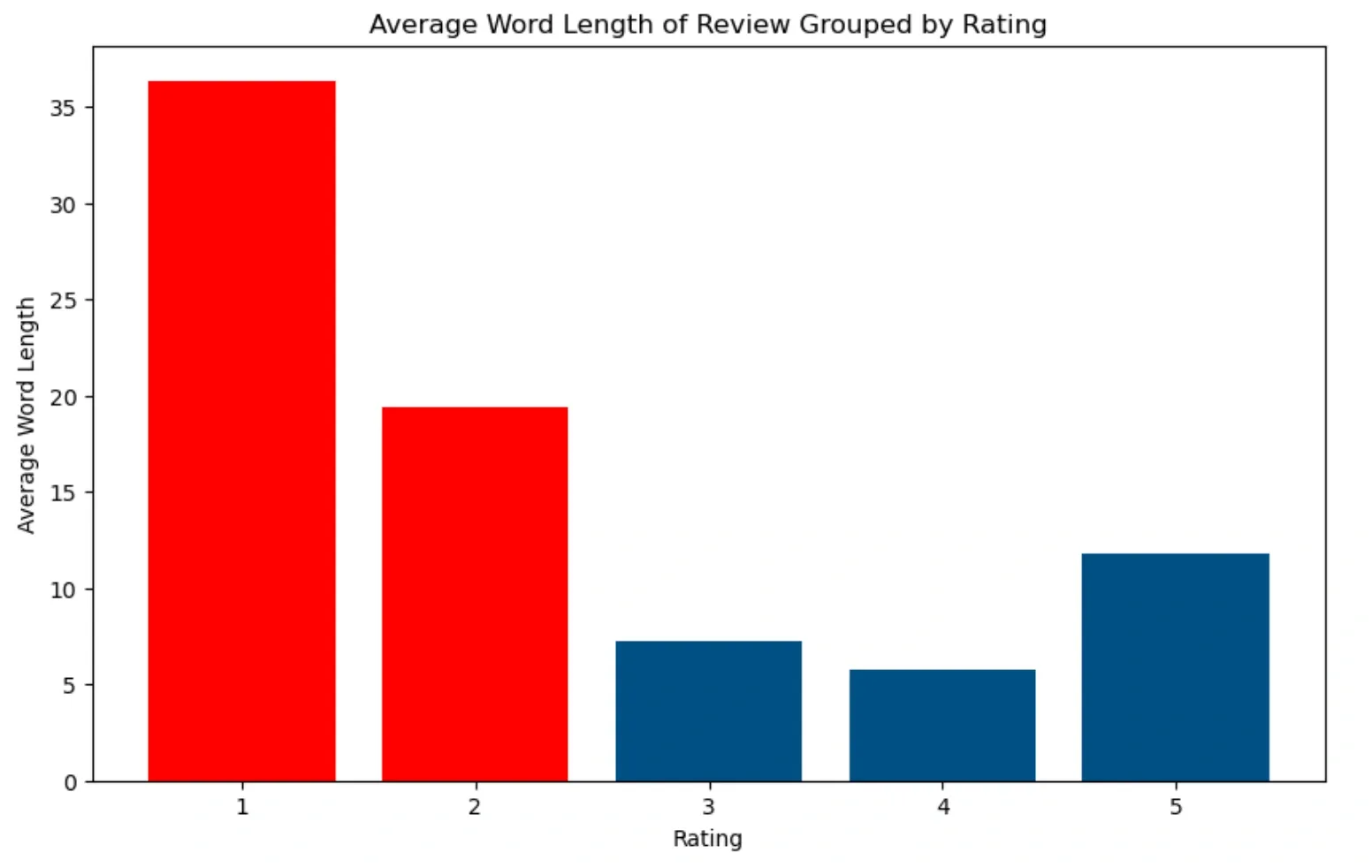
Here’s what we know about reviews so far: Negative reviews – those rated 1 or 2 stars – are often longer, as unhappy customers tend to go into detail about their experiences. But how do factors like the review’s tone, timing, content, and even the way you respond, impact the chances of getting it deleted? Let’s explore the data and find out.
Time-Based Trends of Deleted Reviews
Understanding, when reviews are deleted, can provide insights into Google’s moderation practices. We analysed trends over time to identify patterns in deletions.
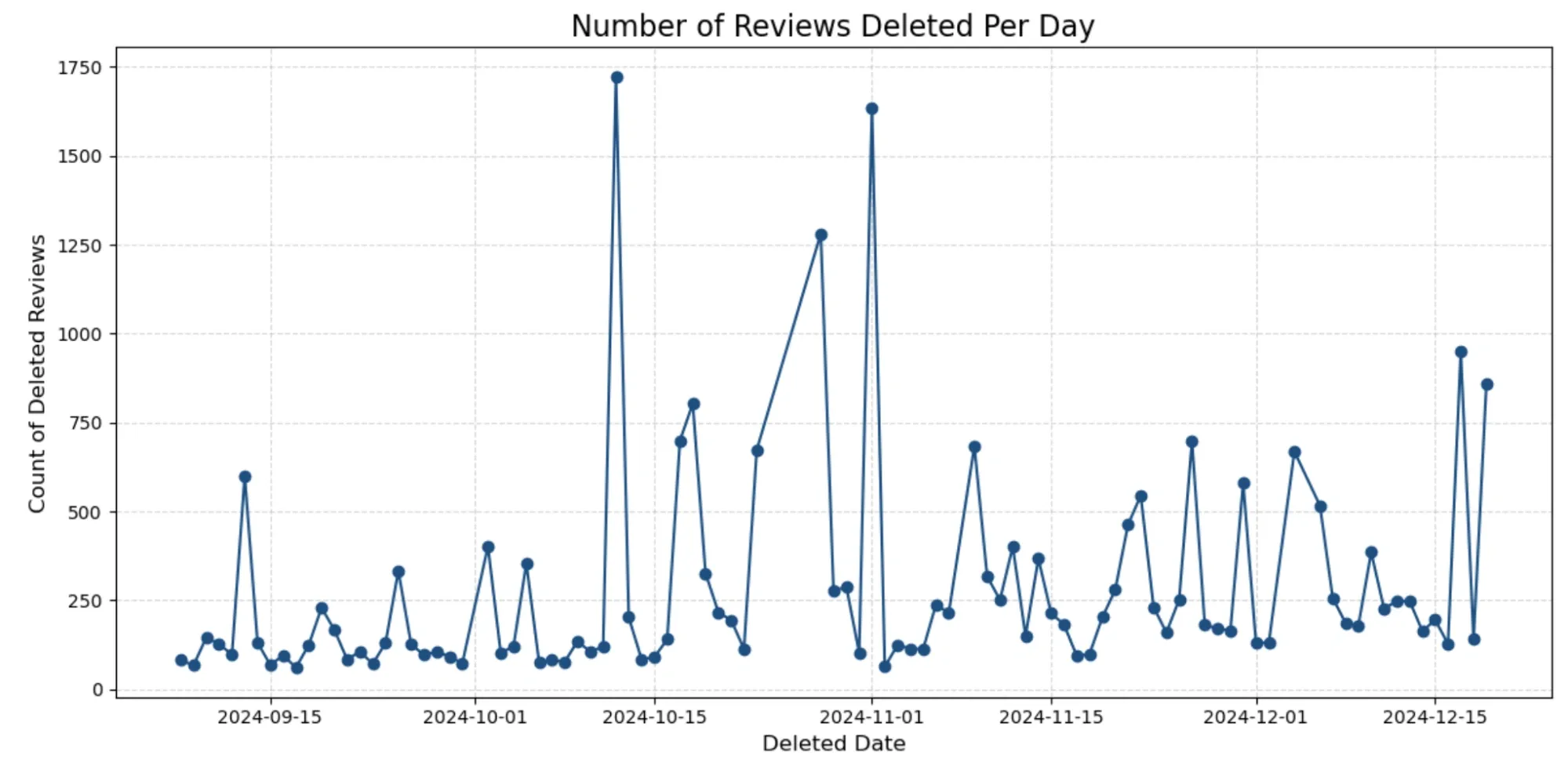
The graph above shows the number of reviews deleted per day over several months. We noticed sporadic spikes in deletion activity, with certain days experiencing a higher volume of deletions—some exceeding 1,500 reviews in a single day, possibly due to policy enforcement or automated spam detection systems.
In October 2024, the Spam Update came into play, targeting spam across the board, including reviews. That could explain why there was a spike around that time. Google also launched the November Core Update, which was all about improving search result quality. It likely hit reviews that didn’t meet Google’s standards for trustworthiness or authenticity. These kinds of updates often result in large-scale removals of content like fake reviews.
Ratings and Replies of Deleted Reviews
Ratings and business replies provide valuable context for understanding patterns in deleted reviews. Here’s what the data reveals about their role in Google’s moderation process.
Rating Distribution of Deleted Reviews
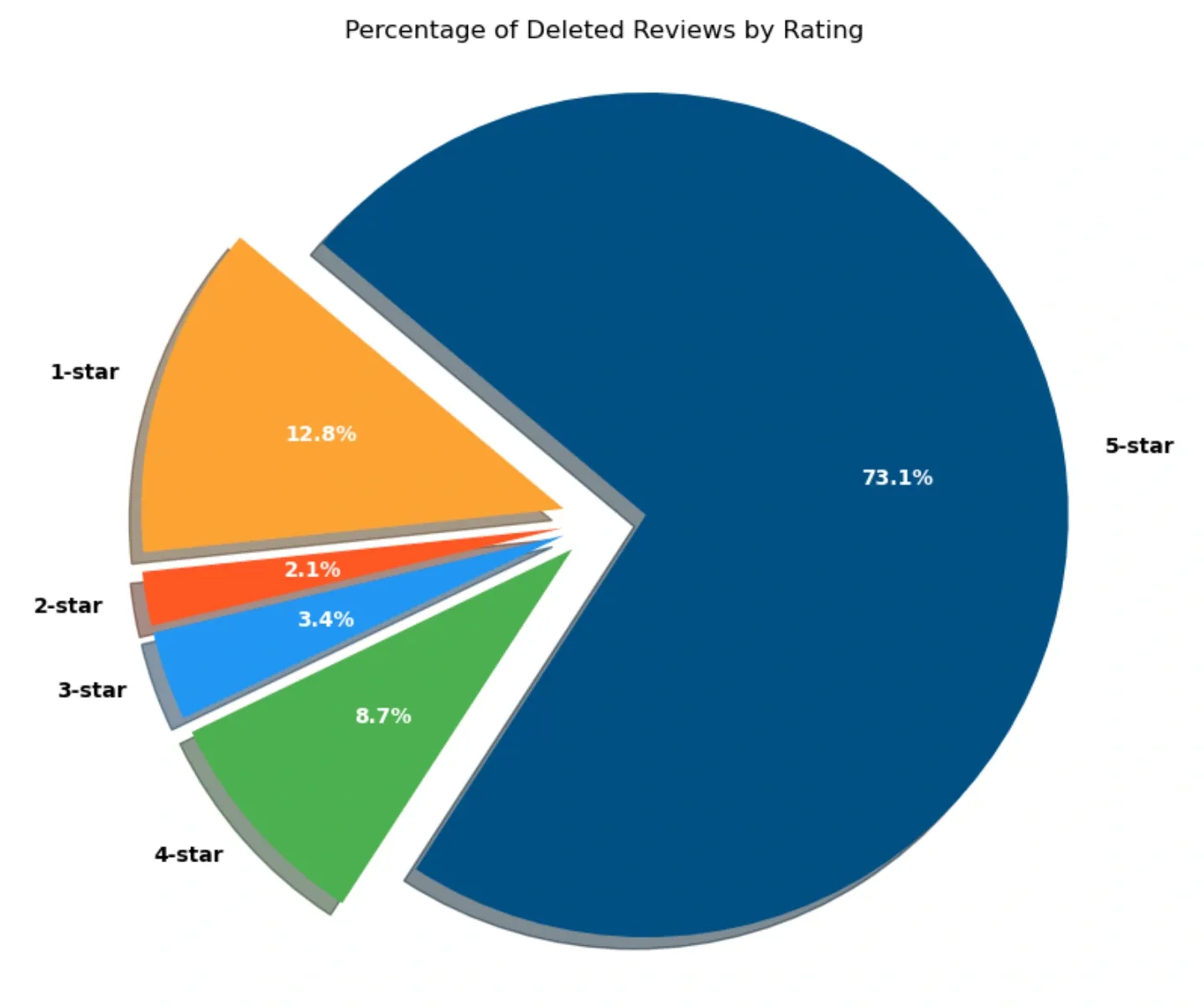
The updated pie chart shows the distribution of deleted reviews by rating. An overwhelming 73.1% were 5-star reviews, followed by 12.8% for 1-star reviews.
The high percentage of 5-star reviews being deleted suggests that Google is actively targeting potentially fake or incentivized positive reviews, which might skew business reputations. Interestingly, while 1-star reviews were significantly fewer than 5-star reviews overall, they ranked as the second most frequently deleted, likely due to violations such as inappropriate language. Moderate reviews (2 to 4 stars) were less likely to be deleted, as they generally appear more balanced and have a smaller impact on business reputation compared to extreme ratings like 1-star or 5-star reviews.
Do Replies Impact Deletions?
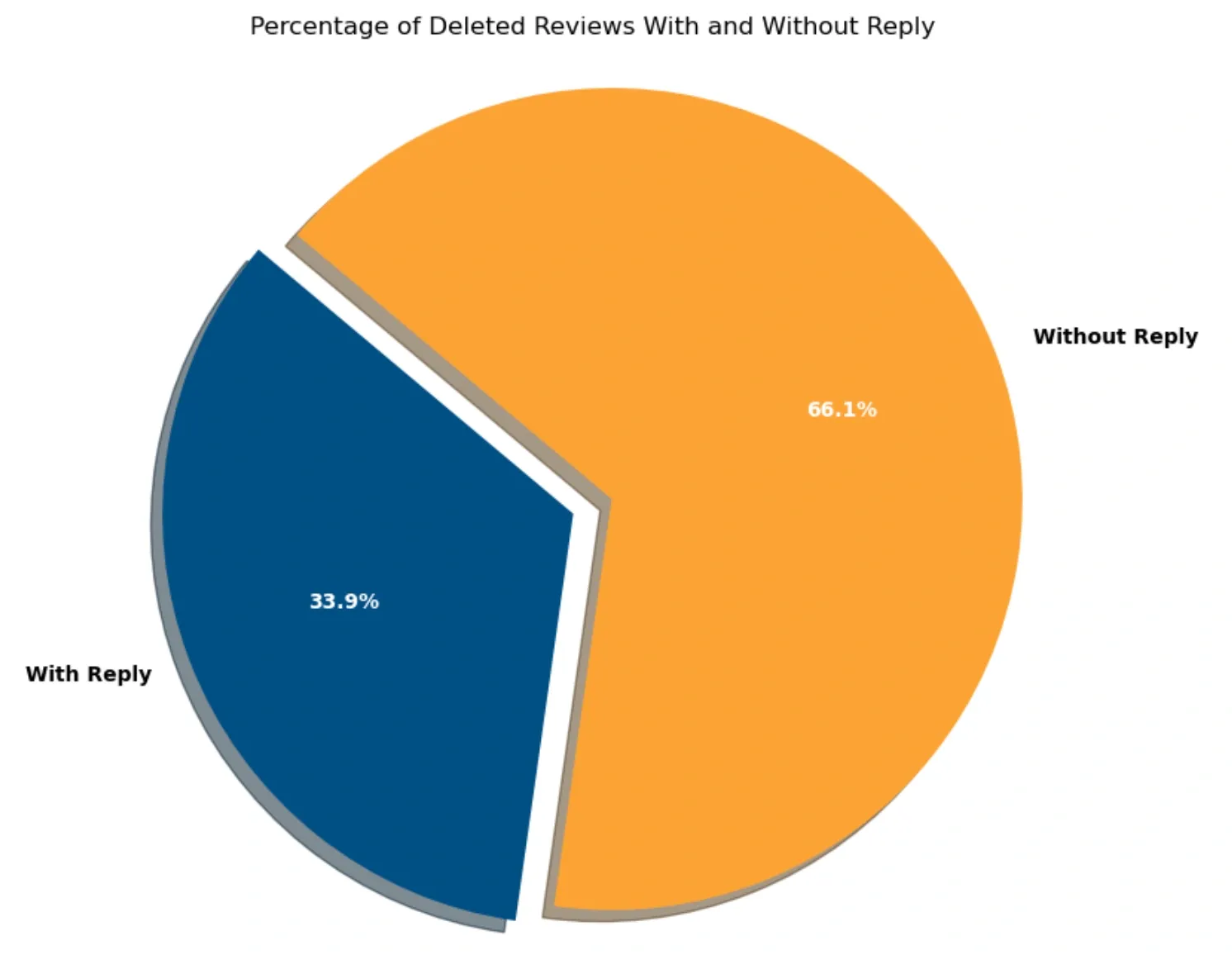
Our data reveals an interesting trend: 66.1% of deleted reviews had no business replies, while 33.9% did. This suggests that engaging with reviewers might help reduce the chances of deletion. However, replies alone aren’t a foolproof safeguard, Google’s algorithms seem to focus more on the quality and authenticity of the review content itself.
Sentiment Analysis of Deleted Reviews
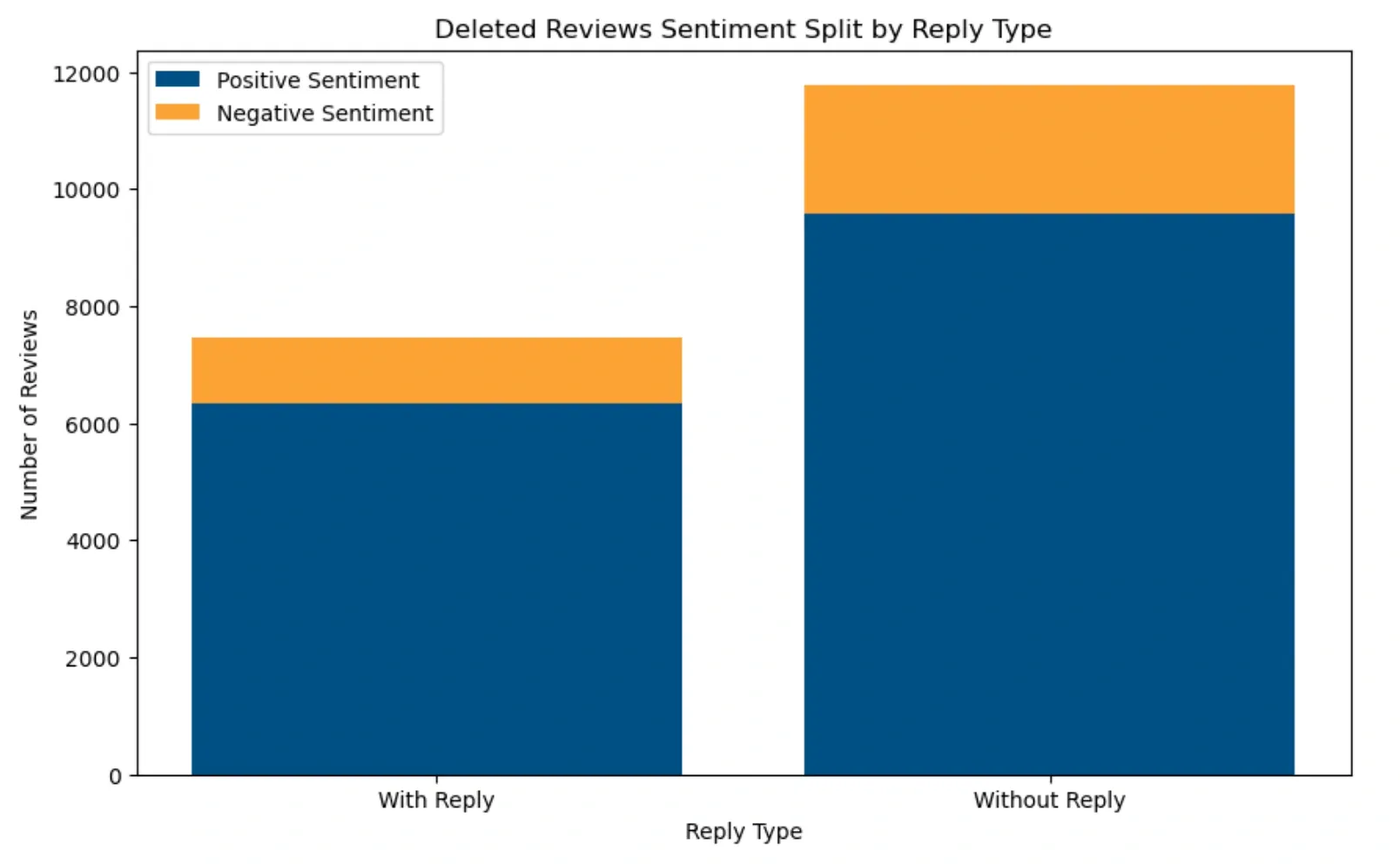
A significant portion of positive reviews without replies are removed, possibly indicating the detection of inauthentic or incentivised reviews.
Deleted vs. Non-Deleted Reviews
By comparing deleted and non-deleted reviews, we can uncover whether or not there are noticeable differences between the two. This analysis provides insights into whether certain patterns or extremes make reviews more likely to be removed.
Ratings
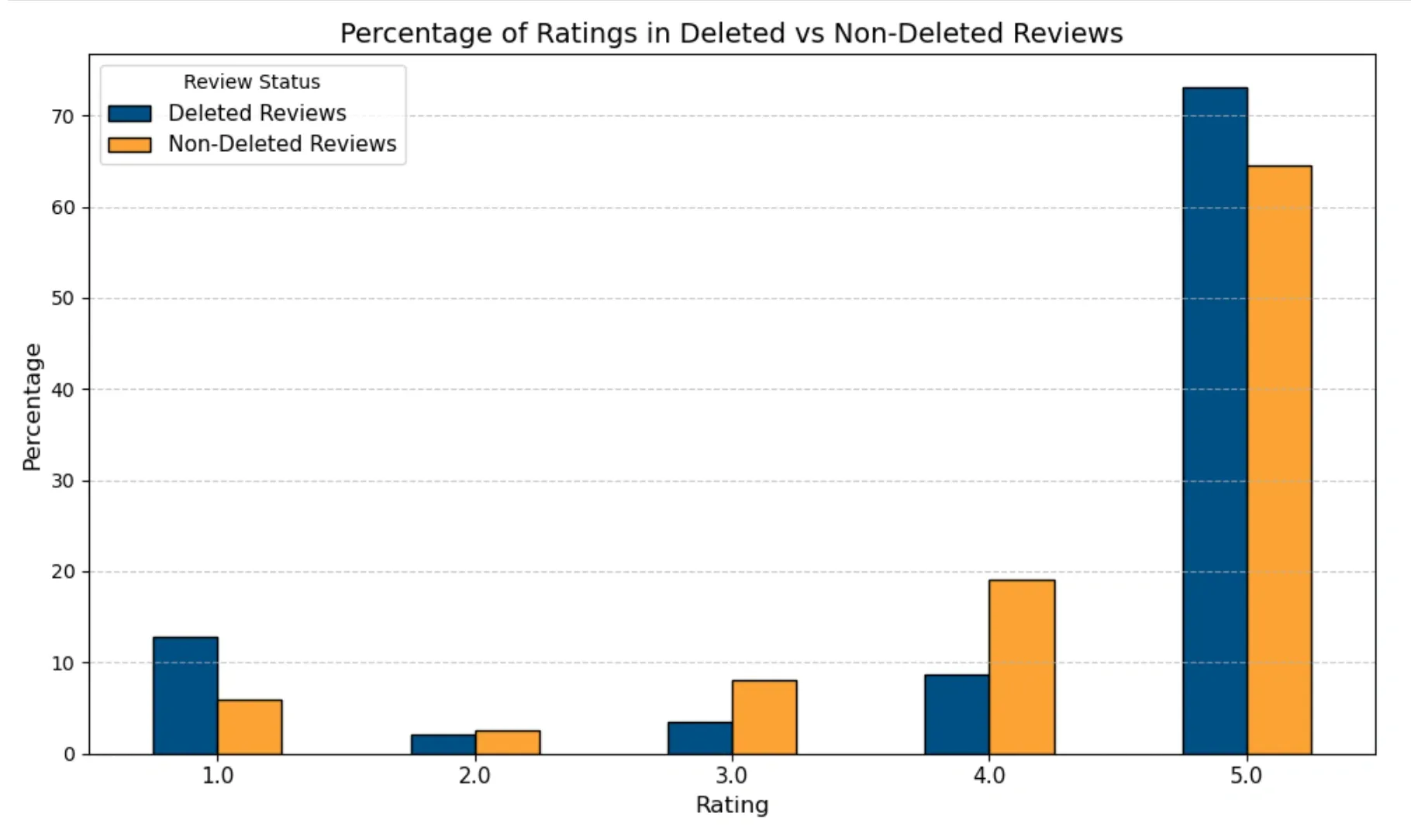
Google targets extreme ratings, with 5-star and 1-star deleted reviews containing a higher percentage than non-deleted reviews. While 5-star reviews are scrutinised for fake or rewarded content, 1-star reviews are often removed for offensive language or spam. This highlights Google’s focus on moderating impactful reviews at both ends of the spectrum.
Categories, Themes, and Industries in Deleted Reviews
The content of a review appears to be a key factor in whether it gets removed. To investigate this, we conducted a detailed analysis of the content and keywords most commonly found in deleted reviews.
Review Categories
Category | Explanation |
|---|---|
Service and Staff | Comments about customer service quality, staff friendliness, expertise, or responsiveness. |
Product or Service Quality | Comments about the quality, reliability, or performance of products or services offered. |
Value and Pricing | Comments about affordability, perceived value, or whether the price matches the experience. |
Environment and Accessibility | Comments about cleanliness, ambiance, location, convenience, or accessibility. |
Overall Experience | Comments about the general experience, problem resolution, or satisfaction with the business. |
Employee Perspectives | Comments written by current or former employees about workplace conditions, management, or company culture. |
Others | Comments that are not related to the topics above. |
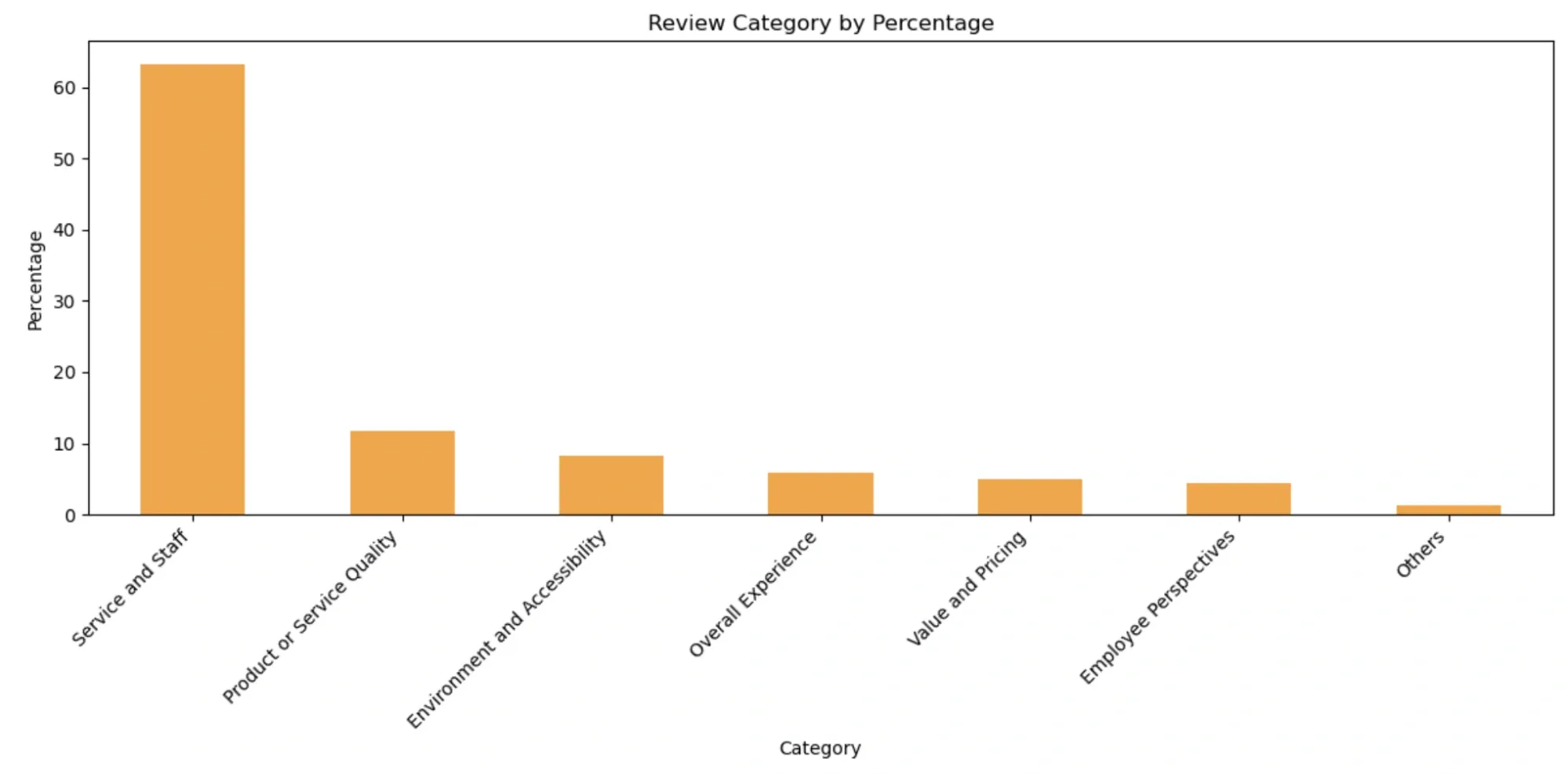
The bar chart highlights the categories most commonly associated with deleted reviews, with “Service and Staff” leading the way, followed by “Product or Service Quality” and “Environment and Accessibility.”
The high proportion of “Service and Staff” reviews being deleted may be tied to the volume of feedback businesses typically receive in this area. While many comments in this category are positive, they may be flagged for authenticity checks, particularly if the reviewer’s history suggests patterns of overly generic, excessively positive, or potentially incentivised feedback.
Interestingly, a portion of deleted reviews falls under “Employee Perspectives.” This indicates that Google actively removes reviews left by employees to minimise biased or self-serving feedback that could distort a business’s reputation. If you see competitors doing this, you can flag these reviews under the “conflict of interest” category and they are likely to be removed.
“I think that the reason “service” is the dominant phrase is that home services are high risk categories with the most fake reviews. And an area that Google focuses on for removal. Along with other service oriented professions like lawyers, web design, real estate and photographers. Again high spam categories. <br><br>As far as I can tell, category drives the removal as much as whether they think it might be spam. One factor in that is the reality that reviewers do not visit the business locations.”
Mike Blumenthal
Near Media
Common Words in Deleted Reviews
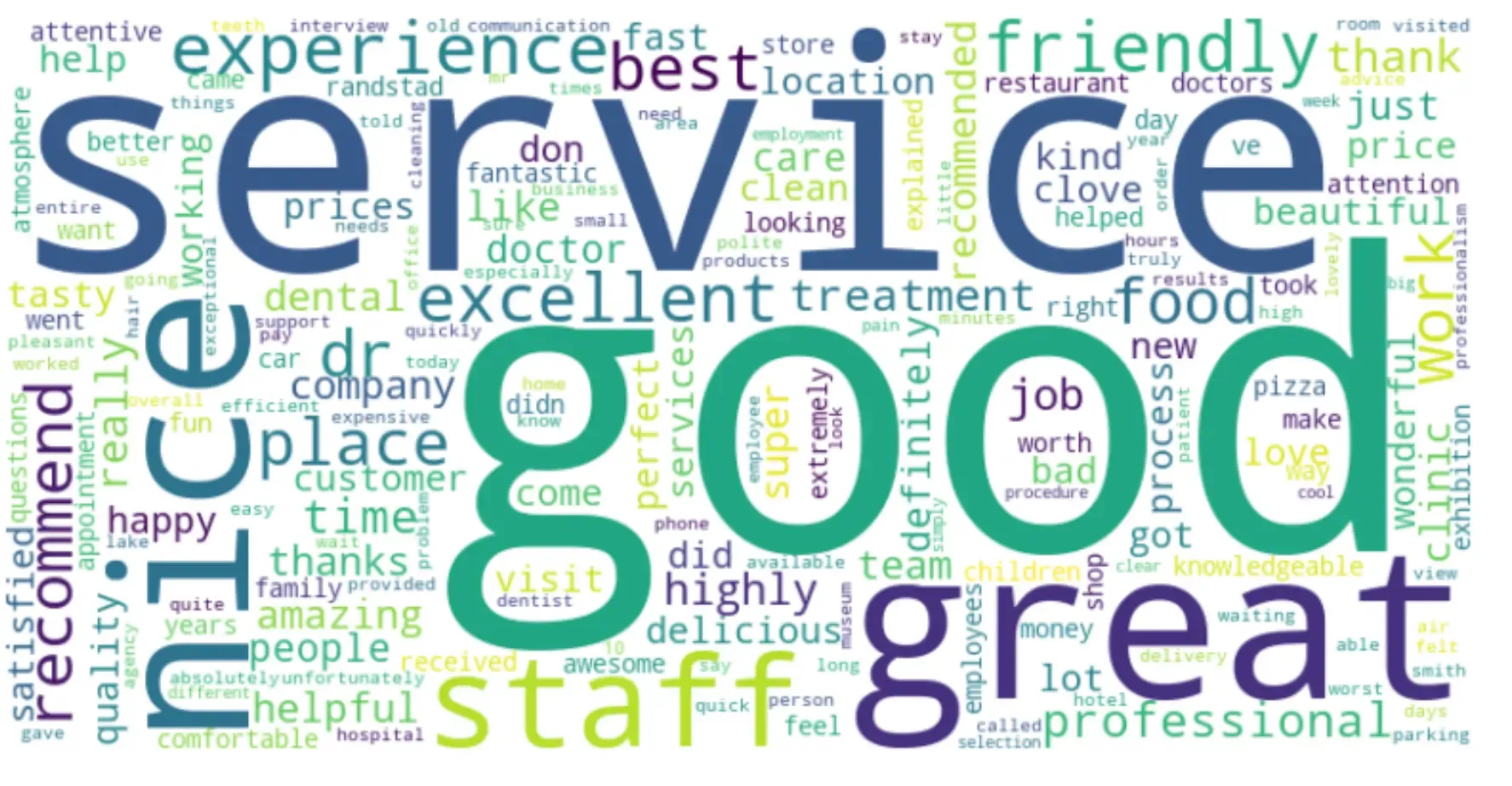
The word cloud showcases the most frequent words found in deleted reviews, with terms like “good”, “service”, “great”, “nice”, and “staff” standing out. This aligns with the earlier observation that many of these reviews have 5-star ratings and frequently focus on “Service and Staff” as the most mentioned category.
Review Industries
Industry | Explanation |
|---|---|
Healthcare & Wellness | Businesses focused on medical care, personal health, and wellness, including hospitals, clinics, spas, and fitness centers. |
Food & Beverage | Customer-facing businesses offering food, drinks, and dining experiences like restaurants and cafes. |
Retail & Consumer Goods | Stores selling products/tangible goods like clothing, electronics, groceries, and specialty items directly to customers. |
Professional Services | Specialised services like legal, financial, and consulting firms that cater to professional or organisational needs. |
Service-Based Industries | Task-oriented businesses offering repair, maintenance, education, logistics, or other services catering to specific operational or individual needs. |
Education | Institutions and services focused on teaching, training, and skill development across various levels. |
Automotive | Businesses dealing with vehicles, including dealerships, repair shops, car washes, and rentals. |
Hospitality & Travel | Covers accommodations, travel services, and leisure activities, including hotels, tour agencies, and recreational facilities. |
Construction & Real Estate | Includes businesses related to construction, property development, and real estate management. |
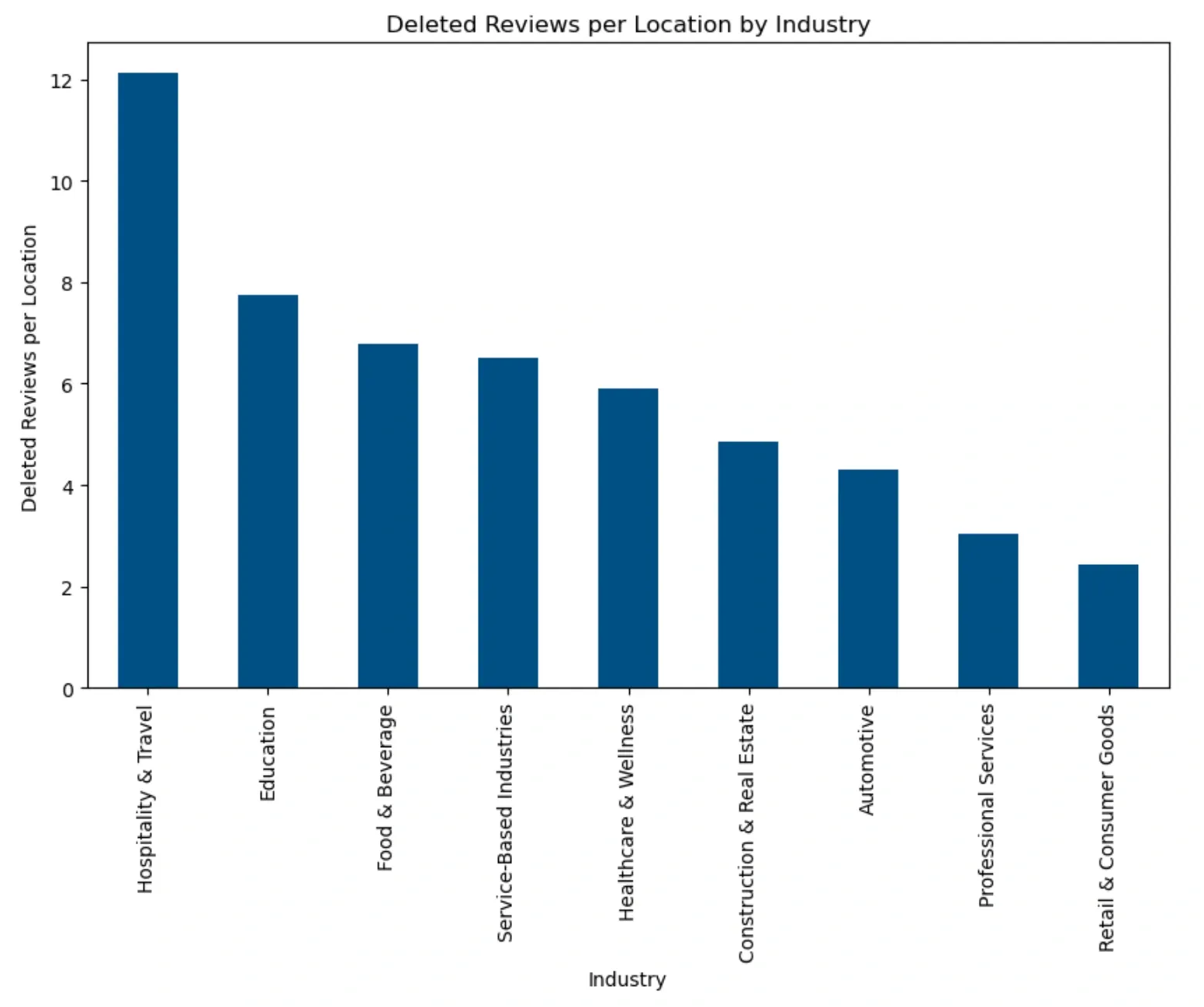
The chart above highlights the deleted reviews per location by industry, calculated by dividing the number of deleted reviews per industry by the number of business locations with deleted reviews per industry.
Hospitality & Travel leads with the highest proportion of deletions, followed by Education and Food & Beverage. This trend suggests that industries with high customer interaction and experience-driven services — such as lodging, dining, and education — are more susceptible to review scrutiny. These sectors often face challenges related to customer satisfaction, which might result in a higher number of flagged or questionable reviews. Meanwhile, Retail & Consumer Goods experiences the lowest number of deleted reviews per location, possibly due to fewer instances of emotionally charged or policy-violating feedback compared to service-driven industries.
Key Insight: The normalisation reveals that even when accounting for industry size, customer-heavy and experience-driven sectors face a higher proportion of deletions. This underscores the importance of maintaining review quality and authenticity in these industries to minimise removal risks.
Machine Learning Insights
To better understand what factors influence whether a review is deleted, we developed a machine-learning model using the Random Forest algorithm. Our analysis focused only on review-specific data, as we didn’t have access to information about the reviewers themselves. The model achieved an accuracy of 64% and revealed the top four factors that play a role in review deletion:
Review Length
The total number of characters in the review.
Word Count
The number of words in the review.Sentiment: The tone of the review is measured on a scale from -1 (entirely negative) to 1 (entirely positive).
Rating
The rating (1 to 5 stars) of the review.
While these features gave us valuable insights, we know from other research that including reviewer-specific data, like posting patterns or behaviour, can significantly improve the accuracy of detecting fraudulent or low-quality reviews.
The Bigger Picture
Although our model relied solely on review-specific data, these findings underline the importance of integrating reviewer-centric features in future analyses. By combining text-based insights with behavioural data, machine learning models can become more effective at identifying and addressing fake reviews, ensuring businesses can maintain trust and credibility online.
Analysis Summary
Our findings suggest that Google’s review deletion process is driven by several key factors:
Inauthentic Activity
Reviews flagged as fake or promotional, especially in 5-star ratings, appear more likely to be removed.
Keyword-Based Detection
Certain repetitive or generic terms may contribute to reviews being flagged and trigger deletions.
Content and Tone
Extreme ratings, such as overly positive 5-star or negative 1-star reviews, seem to undergo closer examination, potentially due to their large impact on a business’s reputation.
Engagement Factors
Reviews without replies or those from suspicious users may increase the likelihood of deletion. Reviewer-centric features have proven more effective than text features for identifying fake reviews in prediction models.
Policy Enforcement
Reviews related to sensitive topics, such as employee feedback, may also be subject to moderation to ensure impartiality.
Industry-Specific Trends
Customer-heavy and experience-driven sectors experience the highest deletions per location.
Recommendations for Businesses
To minimise the risk of review deletions:
Engage with Reviewers
Respond promptly to both positive and negative reviews, especially positive ones, as engaging with them may reduce the likelihood of deletion.
Deploy Local SEO Tools
Managing multiple locations can be difficult when done manually, using a review management tool and getting some support on bulk verification can help you protect your brand and grow your reputation.
Avoid Incentivised Reviews
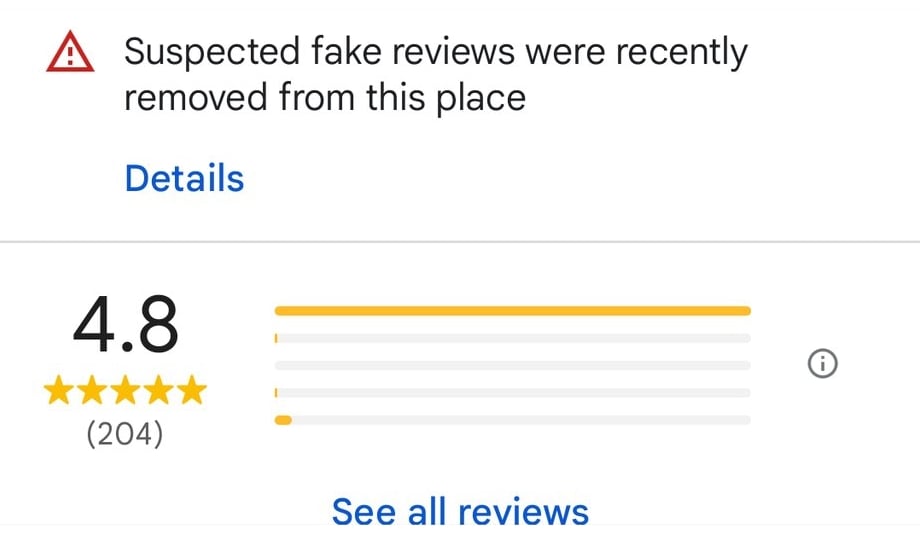
Encourage organic reviews rather than offering rewards. We have seen the first businesses being penalised and having a warning displayed on their profile that “fake reviews were recently removed from this profile”.
Monitor for Policy Compliance
Regularly review Google’s content policies and ensure that your reviews comply.Report Fake Reviews: Actively report spam or inauthentic reviews to Google for resolution.
With tools like GMBapi.com, businesses can efficiently track and respond to reviews, helping to protect their online reputation. By responding promptly, you not only engage with your customers but also reduce the potential negative impact of unresolved feedback. You write those review responses for potential customers who are investigating whether or not to deal with your business. Additionally, GMBapi’s software monitors all deleted reviews, providing valuable insights into which reviews Google removes from your Google Business Profiles and why. Those removed reviews can often be re-instated.
Conclusion
Google’s review deletion process highlights its commitment to maintaining a fair and trustworthy platform. While businesses may view deletions as a setback, understanding the underlying reasons can help them adapt strategies to foster authentic, policy-compliant reviews. Our analysis provides a data-driven foundation for navigating these complexities, helping businesses optimise their online reputation in an increasingly competitive digital landscape.
Take control of your reviews and enhance your online presence with GMBapi.com — a reliable solution for efficient and seamless review management!