 Michel van Luijtelaar
Local SEO is the backbone of every successful multi-location business. Tools like Local Brand Manager (LBM) have long been a go-to for technical SEOs who want deep control, with features such as Spintax posting and a credit-based rank tracker offering plenty of flexibility under the hood.
But as teams grow and location counts scale, that level of control can start working against you.
We’re seeing more agencies, franchises, and in-house teams actively searching for Local Brand Manager alternatives, not because LBM isn’t powerful, but because managing credits, configurations, and technical workflows can quickly become a bottleneck. When reporting, posting, and ranking insights require constant micromanagement, efficiency suffers.
Modern local SEO demands a different approach.
In this article, we’ll break down the best alternatives to Local Brand Manager, focusing on platforms built for scale, with straightforward pricing, automation that actually saves time, and AI-powered insights that help you make smarter local decisions without adding operational overhead. If growth is the goal, these are the tools designed to grow with you.
Why Look for a Local Brand Manager Alternative?
Local Brand Manager is a solid platform, especially for highly technical users who want granular control. But as agencies grow and brands add more locations, we’re consistently seeing the same friction points emerge. What works well at a small scale doesn’t always hold up when volume, speed, and visibility really matter.
1. The "Credit" Trap
LBM relies on a strict credit system for rank tracking. While rollover credits are a nice touch, the reality is that teams spend far too much time budgeting scans instead of analysing results. Tracking more keywords, increasing scan frequency, or expanding to new locations quickly turns into a constant trade-off. Many modern platforms remove this friction entirely with unlimited or simplified tracking models.
2. Manual vs. AI Automation
LBM is built for manual control. Features like Spintax offer flexibility, but they require complex, code-like syntax and ongoing manual effort to avoid duplication. Newer platforms lean into generative AI to automatically create unique, natural content at scale, allowing hundreds of locations to stay active without sacrificing quality or consuming hours of setup time.
3. Pricing for Scale
LBM has a “sweet spot” at around 10 locations. However, for single locations (where it costs ~$39/mo) and large franchises (100+ locations), it can be significantly more expensive than competitors who offer bulk efficiencies.
4. Missing "Future" Features
LBM is strictly focused on Google Maps. While that’s still critical, it’s no longer the full picture. As users increasingly turn to AI-powered platforms like ChatGPT, Gemini, and Perplexity for local discovery, visibility in large language model (LLM) answers is becoming just as important as Local Pack rankings. Tools that stop at Google Maps leave that insight gap wide open.
5. Missing "Apple" Alignment
Google is dominant, but it’s not alone. A growing percentage of local searches, especially on iOS, happen through Apple Maps and Apple Business Connect. Platforms that remain “Google-only” miss a significant slice of real-world visibility. Modern local SEO tools are starting to treat Apple alignment as a core requirement, not an afterthought.
What to Look for in an Alternative?
- Rank Tracking: Do you want to keep counting credits, or do you want the freedom to scan as often as needed without limitations?
- Automation: Do you want to manually write and manage Spintax, or would you rather let AI handle posting, replies, and localised content at scale?
- Competitor Intel: Can you clearly see your Share of Voice against your top local competitors, automatically, across every location?
- Pricing: Does pricing become more efficient as you grow, or does each new location add complexity and cost?
- Network Reach: Does the platform extend beyond Google? Does the tool align with Apple Business Connect to cover iPhone users? Do you need more networks?
Best Local Brand Manager Alternatives
1. GMBapi.com - Best All-in-One Alternative & Best Value
GMBapi.com is built for agencies and multi-location brands ready to move from manual management to AI-driven scale. It removes the two biggest pain points users experience with Local Brand Manager: credit anxiety and operational complexity.
Instead of managing limits, syntax, and spreadsheets, GMBapi.com focuses on automation, visibility, and clean scaling, without forcing you to pay for features you don’t use.
Key Features
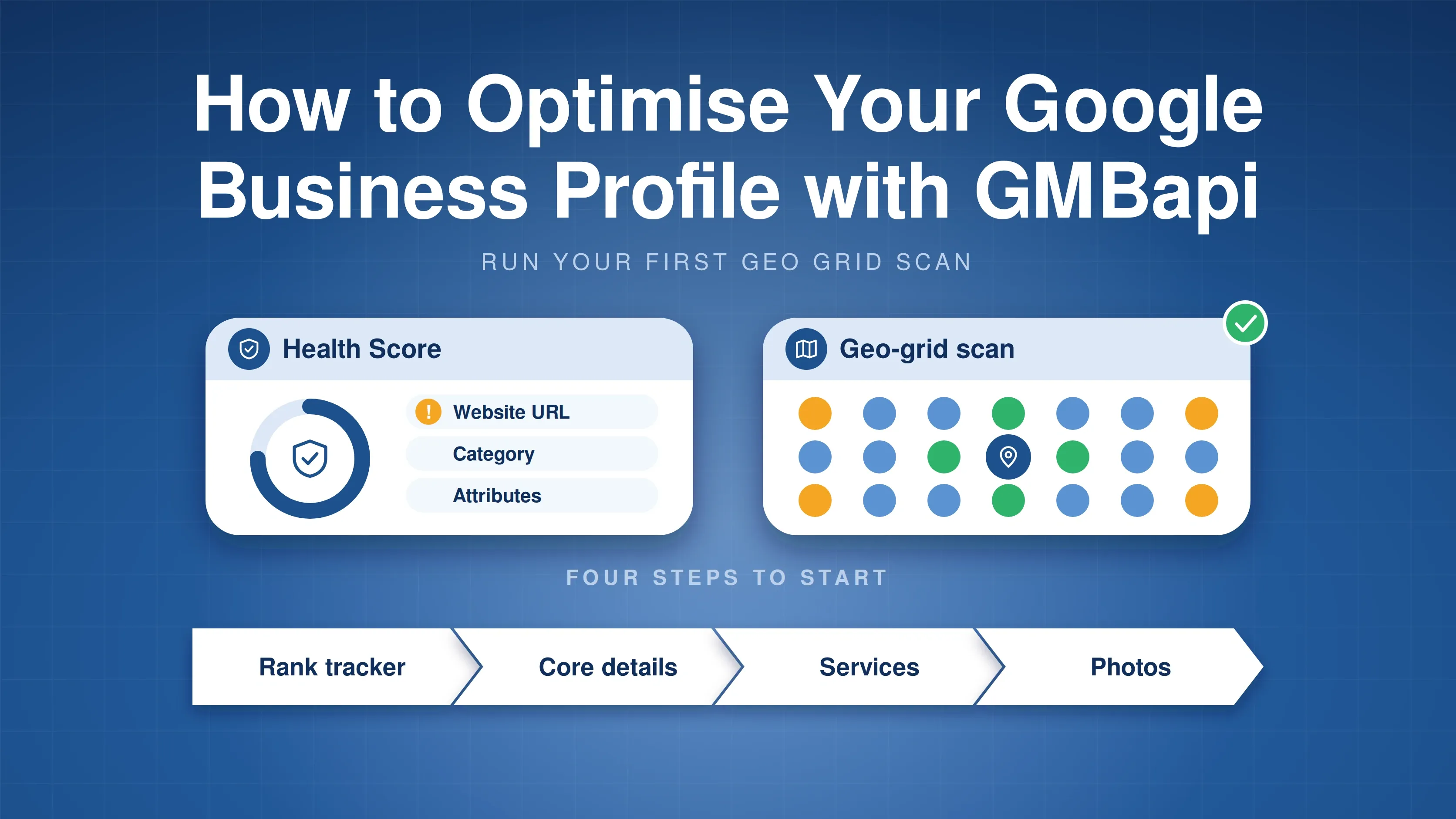
Unlimited Geo-Grid Scans
Unlike LBM’s credit system, GMBapi.com offers unlimited scans for your locations. Track as often as you want without worrying about “running out.”
Better Pricing at the Edges:Single Location
- Single Location: ~$14/mo (vs. LBM’s ~$39/mo).
- 100 Locations: ~$8/location (vs. LBM’s higher tiers).
Local LLM Tracking
The first tool to track your brand’s visibility in ChatGPT, Gemini, and Perplexity, ensuring you are future-proof.
AI Agent vs. Spintax
Instead of writing complex Spintax manually, use the AI Agent to draft unique, location-specific posts and review responses instantly.
Bulk Editing without Spreadsheets
Update hours, attributes, and services for 50+ locations via the UI, no CSV uploads required.
Competitor Review Monitoring
Automatically track what customers are saying about your top 20 competitors (e.g., “Their service is slow”) to spot market gaps.
Best price guarantee: If you receive a credible proposal that you can share with better pricing in the 10–100 location range, GMBapi.com will match it. No negotiation games.
2. Local Viking
Local Viking is the closest direct competitor to Local Brand Manager in terms of “feel.” It is also built for technical SEOs and shares many of the same features.
Pros
Robust scheduling, familiar interface for LBM users, white-label reporting.
Cons
Still relies on a credit-based rank tracking system. If you are leaving LBM to escape credits, this isn’t the solution.
Best For: Technical SEOs who want a similar experience to LBM but perhaps a different interface.
3. BrightLocal
BrightLocal is a well-known name in the industry, famous for its citation-building services.
Pros
Excellent citation tools and “audit” reports. Great for winning new clients.
Cons
Rank tracking can be slow and expensive at high volumes. Lacks the “real-time” agility of GMBapi.com or LBM.
Best For: Smaller agencies focused on citations and client acquisition.
4. Places Scout
A heavy-hitter for enterprise reporting.
Pros
incredibly detailed data and historical reporting.
Cons
The interface can be overwhelming, and the learning curve is steep. It is often overkill for standard franchise management.
Best For: Large enterprises that need raw data exports for internal BI tools.
Verdict: Which Local Brand Manager Alternative is Right for You?
The choice depends on your philosophy: Control vs. Efficiency.
If you’re a technical SEO who thrives on deep customisation, writing Spintax by hand, managing every post variation, and carefully hoarding credits for those quarterly deep dives, then sticking with Local Brand Manager or trying Local Viking makes sense. These tools give you that hands-on control you love.
But if you’re ready to work smarter, not harder, GMBapi.com is made for you. Say goodbye to credit limits and tedious manual setups. With unlimited GeoGrid tracking, AI-powered content creation, and next-level Local LLM visibility, GMBapi.com delivers modern efficiency at a fraction of the cost. Single locations pay around $14/month (vs. LBM’s $39), and it scales effortlessly for franchises with dozens or hundreds of locations.
Ready to stop counting credits and start scaling smarter? Try GMBapi.com free today and discover why so many agencies are making the switch from legacy credit-based tools.