Reserve with Google in Google Ads: Book Buttons Now Appear on Search and Performance Max

Google is putting a Book button on your ads, and nobody has to switch it on. Reserve with Google appointment booking is extending out of organic Local Search and Maps and onto Google's paid surfaces, so eligible merchants running Search or Performance Max campaigns can now send consumers straight from an ad into a scheduling platform. It's the same action link you already published, doing a new job.
The change reached Google Actions Center partners this week, ahead of any industry coverage. Here's what Google's own documentation confirms, and where the operational risk sits for multi-location brands.
The Same Action Link Now Works in Paid Ads
There's nothing new to build. Google's Actions Center documentation states that merchants on an Appointments Redirect integration can enable a Book button on Google's Ads surface using the same action link that already powers the organic Book button on the Business Profile. The consumer flow works the way it does in organic search: they click, they land on your scheduling platform, and they book there.
Conversion tracking arrives without any additional tagging work. Google tracks the booking with an encrypted token, so attribution lands in the Google Ads account without anyone touching the booking partner's site, and advertisers pay for the click on the button rather than for the booking itself.
Available Is Not the Same as Active, and Healthcare Is Excluded
Read this part before you report anything to a client. Google's Ads documentation confirms the "Appointments booked" conversion goal is available to all eligible accounts with no manual opt-in, and it also states the conversion action still has to be included in your campaign settings before it influences bidding. Those are two separate things: whether the Book button can appear, and whether your bidding is chasing bookings at all. Targeting bookings through campaign goals is how a client grows bookings for their paid campaigns.
Healthcare is the exception. Clinics can be eligible for an Appointments Redirect integration organically, but Google's Ads documentation states that Google Ads doesn't allow appointment booking links or goals for healthcare campaigns. A clinic or medspa keeps its organic Book button and gets nothing on the paid side.
The Opt-Out Sits in Google Ads, Not the Business Profile
Opting out is an advertiser decision. Merchants who don't want Book buttons on their ads remove the Partner Bookings conversion action from the Google Ads campaign or from the account (learn more), which means this isn't a Business Profile setting and it isn't something a local team can toggle.
That matters more than it sounds. Where local SEO and paid media sit with different teams, or different vendors, the person who publishes the booking link and the person who can switch the Book button off are not the same person, and right now neither of them owns the decision.
A Bad Booking Link Now Costs Media Budget
Here's where the real risk sits. Most multi-location portfolios are carrying a few hundred booking links, published at different times by different people, pointing wherever the local team pointed them. Until this week, one aimed at a generic homepage cost you organic clicks. Now that same link sits behind a paid Book button, so every consumer who clicks it and finds no booking flow is media budget spent on a dead end.
Performance Max sharpens the problem. PMax moves budget toward whichever conversion looks cheapest, and a newly available booking conversion is exactly the kind of change that shifts spend quietly, toward locations whose links nobody has checked in two years.
Google's content rules add a second exposure. Service names and descriptions need accurate final prices, with no emojis, URLs, phone numbers, or promotional text, and each of those is a documented takedown reason that now removes a paid entry point as well as an organic one.
What This Means for Your Team
If you manage a single location, confirm your booking link resolves to a real booking page, then decide whether you want bookings counted in your campaign settings.
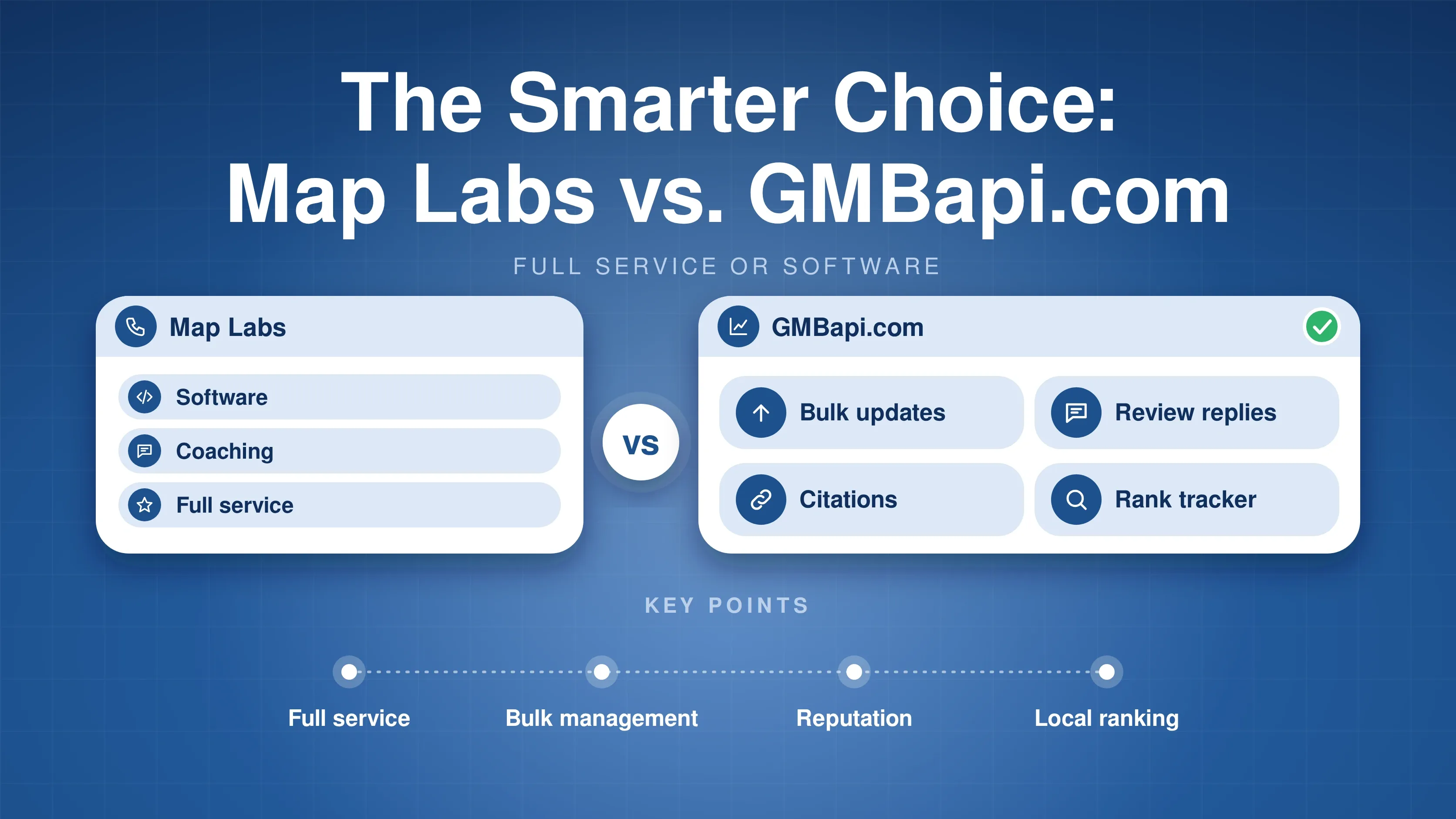
If you run an agency or a multi-location brand, audit the action link for every location this week, find out who holds each Google Ads account, and settle where "Appointments booked" belongs before your campaigns settle it for you. It's also a reason to reopen the conversation with clients who never finished their booking setup, because the channel just got more valuable and a broken link just got more expensive. GMBapi publishes appointment links to both Google and Apple Maps across a full portfolio, screens every location for eligibility before it goes live, and applies Google's content rules at publish time, so one badly worded service name doesn't put a whole integration at risk.
Source
Prefer our local search coverage?
Add GMBapi as a preferred source on Google so our articles show up more often for you.